A popular grill recipe, we found a number of variations when we were researching ideas for our experiment. Some people smoked the bird, some covered it in a rub, some brined, some even baked in the oven! However the one thing we didn’t find were any tests on the various flavors you could get from using different beers – every recipe we saw either used a lager or didn’t specify.
Since the recipe seems to center around beer we were a bit surprised that more attention hadn’t been given to this aspect. However, as keen beer drinkers we were more than prepared to do the leg work ourselves. A quick stop at the supermarket later we had our supplies: 3 bottles of beer (1 Dopplebock (Aventus), 1 extra hoppy IPA (Epic Armageddon), 1 strong English Ale (Fuller’s 1845), 3 chickens, and 1 can of Dr Pepper (a good excuse to buy my fizzy drink of choice).
The technique can basically be divided into 4 steps: prepare the can, prepare the chicken, insert the can, and place on the grill. Something so simple surely must not have much room for error. Well, it does.
Our first chicken used the Strong English Ale. The can was half filled, inserted, and cooked without any problems. A delicious, crispy skinned bird resulted. However, we couldn’t taste any beer flavor or anything that we could contribute to the beer. It just tasted like a very nicely cooked chicken.
Our second chicken was paired with the extra hoppy IPA, or at least it was supposed to be. The can was half filled, as required, and the rest of the bottle was quickly polished off. Then we moved onto insertion, this was a mistake! With no beer reserves, when the can tipped over during the first insertion attempt and we lost around half of what was in the can, we were in dire straits. Yes, I admit, there was a small amount of cursing going on in the room. Then, at the second insertion attempt, when the greasy chicken flew out of my husband’s hands and skidded across the kitchen floor… well it was just hysterical laughter at that point. Of course by now the can was empty. We made a quick substitution of a tasty Mead (medium sweet), thinking a honey flavor could go quite nicely with chicken, and finally managed, on the third try, to get the can into the chicken. This one cooked up beautifully again, crispy skin, succulent flesh, but no apparent flavor from the mead.
Our third chicken was cooked with Aventus Dopplebock (the best beer of the bunch in my opinion). Everything went smoothly and the result at the end was again nicely cooked. This time however, we could taste some flavor imparted by the beer, albeit faint. The chicken was mildly richer and slightly sweeter. It also gave the flesh a rosy pinkness. I have to stress that these differences were very mild, and I personally would get much more pleasure out of drinking every drop of this beer myself.
So in conclusion, the technique itself produces nicely cooked chickens with the important crispy skin, however the beer used didn’t seem to make must of a difference. From our results it seems likely that any liquid would do the trick. A bit disappointing, but interesting nonetheless.
I wonder what would happen if I marinated the chicken in the beer though… hmm

Ingredients:
1 whole chicken
1 can (if your beer of choice is in a can, then use that, but if you’re using a bottled beer then use a soda can)
1/2 a can of beer
Butter or olive oil
Salt and Pepper
–Because the main purpose of this experiment was to test the results of using different beers, we decided that smoking the chicken or applying a rub would cover up the beer flavors and so shouldn’t be used in our experiment. However, if you want to smoke or put a rub on your Beer Can Chicken, feel free! We have included instructions for both.–
Start your grill so it has time to preheat before putting the chicken on to cook.
We used a gas grill for this recipe, but if you want to use a charcoal BBQ, that will work as well.
This recipe uses indirect cooking. If you are using a gas grill, make sure to only turn on a burner away from where the chicken will be sitting. (We used a temperature of Med-High). If you are using a charcoal BBQ, make sure to move the coals either to one side (so the chicken can be place on the opposite side of the grill), or to both sides with an empty space in the middle (so the chicken can be placed in the middle over this empty space).
Smoking: If you are smoking your chicken, start soaking the wood chips now.


If you’re using a soda can like us, then drink all the contents, otherwise, if the beer you’re using is in the can, drink approximately half the can.
Poke some holes in the top of the can (we made 6 holes) using whatever aluminum poking instrument you have handy. We used kitchen shears, maybe not the best option, but it was all we could find. For our second chicken we cut the top all the way off in the hopes that this would increase the beer penetration. However, it didn’t seem to make much of a difference.
If you’re using bottled beer, fill the can halfway. Make sure to let the foam settle before drinking the rest, you may need to top up your can!

Now you need to grease up and season the chicken. This will give you crispy skin that you won’t be able to resist no matter how health conscious you are. (Yes I admit it; crispy skin is my favorite part of the whole chicken).
Using someone else’s hands (if you’re like me and hate touching raw meat), rub softened butter or oil all over the chicken.
Season (generously!) with salt and sprinkle on some black pepper. (Of course this does come down to personal taste, but I like my chicken skin only lightly peppery but very salty, think potato chips.)
Applying a Rub: If you are putting a rub on the chicken, do this instead of seasoning with salt and pepper. Rub your chosen dry rub all over the chicken, particularly under the skin as much as possible, and then rub oil all over the chicken. See the rub recipe at the bottom of this post.


Really, it is impossible not to laugh at this step.
Insert the can half filled with beer into the chicken’s opening. It is at the rear side, hence the other name for this recipe ‘Beer Butt Chicken’.
Be careful not to tip the can over or drop the greasy chicken like we did.

Carefully place the can with the chicken on top onto the preheated grill. Make sure to put it on the side away from the heat source.
Put the lid on and open the top vent.
Cooking time can vary considerably, depending on the size of your bird and the actual temperature of your grill. An instant read thermometer will be the most accurate way to tell when your chicken is done.
Check the temperature after 1 hour by sticking the thermometer into the chicken’s thigh (making sure not to touch the bone) and the breast, it will read 170 degrees F when the chicken is done.
Smoking: If you are smoking the chicken, put the drained wood chips on the coals when you put the chicken on the BBQ.

——
This recipe is a great starting point, adjust and add to it as you like.
Ingredients:
4 Tablespoons paprika
2 Tablespoons salt
2 Tablespoons sugar
2 Tablespoons brown sugar
2 Tablespoons ground cumin
2 Tablespoons chili powder
2 Tablespoons freshly ground black pepper
1 Tablespoon cayenne pepper
Combine all the ingredients in a small bowl and mix well. Reserve until needed.
David B. May 17th, 2010
Posted In: Meat, Poultry, and Fish, Recipes

This recipe is incredibly easy and delicious, but keep in mind that cooking time is 2 hours.
We made this recipe with two different flavors of Grumpy’s BBQ sauce. The ‘Good night loving’ Texas Style and the ‘Bold XX’ Kansas City Style. The Tasters (Me, my husband, my mother-in-law, and my nephew) were divided in our favorites. However we all agreed that the Texas style is a bit spicier (but oh so delicious, yes you guessed it, my favorite was the Texas style). We still have two more flavors of Grumpy’s BBQ sauces to try, but so far I’m impressed with them, very, very delicious.
Serves 2-3 if you’re hungry
(If you don’t have any chili powder, you can make your own by mixing 1 teaspoon paprika, 2 teaspoons cumin, 1 teaspoon cayenne, 1 teaspoon oregano, 2 teaspoons garlic powder)
Start up the BBQ. Because we are smoking the ribs in this recipe, we used a charcoal bbq, but if your bbq can’t smoke, don’t worry, even unsmoked these ribs are very tasty. The coals should be placed as far to one side of the bbq as possible. The ribs will be going on the opposite side, as far from the heat as possible, we want them to cook slowly.
Soak the wood chips. It’s important to soak the wood chips until they are fully saturated this is so they don’t catch on fire and burn up when they’re put on the hot coals. We want smoke, not flames. Ours were more sawdust than chips, so they only needed half an hour, but if you have larger chunks you may need to soak them for an hour.


To get delicious tender ribs, the important first step is to remove the membrane on the back side. Turn the rack so the boney side is facing up. Using either your fingers or a butter knife, pry up a bit of the membrane at one side of the rack. (picture 1)
Pull the membrane that you have pried up, you want to pull it across the ribs, removing all the membrane. If you’re lucky it will come off in one piece! The membrane can be quite slippery, so if you’re having trouble gripping it try using a paper towel. (picture 2)
Two racks with membranes removed. (picture 3)


Mix together the cumin, chili powder, paprika, salt, and pepper in a bowl.
Sprinkle the rub onto both sides of the rack, you don’t have to use all of it.
NOTE: Be careful to only lightly rub the mixture into the meat. If you rub it in too vigorously the flavor becomes very intense.


Make sure the coals are stacked at one side of the bbq and are white hot.
Bring your ribs and soaked wood chips to the bbq. Drain off as much water as you can from the wood chips
Remove the grate and put the wood chips on the hot coals. Use your hands to do this, and squeeze out excess water before putting the chips on the coals. Replace the grate.
Place the ribs on the grate, as far from the coals as possible. Since they will be cooking for a total of 2 hours, we don’t want the coals to be cooking them directly. Make sure the ribs are meaty side up.
Put the lid on the grill, make sure it is positioned so the vents are on the same side as the meat, this way the smoke has to pass over the meat to escape.
Adjust the vent opening so it is only ¼ open, and enjoy the smoke show.
Leave the bbq for one hour. Do not open the lid to peek!


Now that you’ve patiently waited one hour, remove the grill lid.
For this second hour you need to baste every 15 minutes with your chosen BBQ Sauce (as I mentioned in the introduction, we used two different Grumpy’s BBQ Sauces, their ‘Goodnight Loving’ Texas Style and their ‘Bold XX’ Kansas City style. Both of them were incredibly delicious, I liked the Texas style best, however my husband disagrees and thinks the Kansas City one has the edge.)
After the last basting, leave the ribs on the bbq for 5 more minutes (make sure to put the lid back on). Then remove and prepare to eat!


Serve the ribs with a nice green salad, such as our Bacon Lettuce, Avocado, and Tomato Salad, french fries, or both!
David B. May 2nd, 2010
Posted In: Recipes

This fresh and flavorful BLAT salad is perfect as a light meal or a side dish. At the moment it is probably my favorite and most common lunch meal. The ingredients seem to change each time I make it, but some of my favorite variations are: feta instead of cheddar, halved olives (kalamata preferably), button mushrooms halved and cooked in a frying pan with some butter and salt.
This recipe is part of our Memorial Day Menu.
These ingredient quantities are very loose, feel free to vary them depending on what you have available, personal preference, and the amount of people you’re serving.
Makes 4 large servings (it’s so good that a small serving just isn’t enough)


Cook your bacon in a frying pan with a little oil. How long you cook it for depends on your preference. I like it crispy, my husband likes it chewy, so we cook it until slightly crispy as a compromise (that way neither of us are entirely satisfied). When the bacon is done to your liking, chop it up.
Chop the onions finely, the idea is to have they pieces small enough that they mix in and you don’t get big bites of onion while eating the salad.
Slice the avocados into fairly large chunks, be careful not to make the pieces too small or they will dissolve into mush when you toss the salad
Cut the tomatoes into halves or quarters if you’re using cherry tomatoes, otherwise cut them into a chunky dice.
Wash the lettuce and chop it into bite sized pieces, even if the leaves you start with are fairly small, like baby spinach, it still makes for a much nicer salad if you chop them up into smaller pieces.
Grate a couple of handfuls of cheese, if you don’t want cheese in your salad, feel free to leave it out, it will still be delicious!


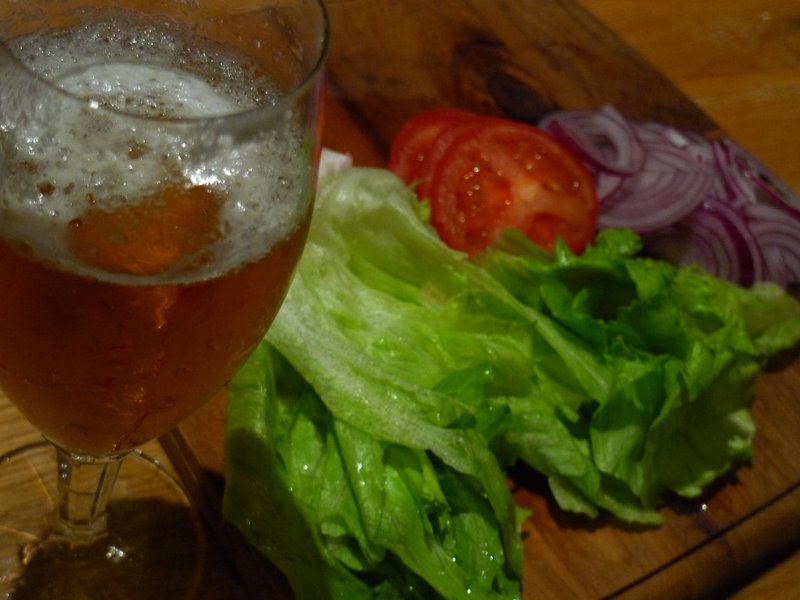
Put the lettuce in a large serving bowl, add the tomatoes, onions, avocados, bacon, and cheese. Mix it up and decide if the proportions of the ingredients seem right to you. Since we had found such delicious tomatoes at the farmer’s market, we decided to put a few more in.
Drizzle some caesar dressing over the top, but don’t put too much on, it goes further than you’d think. Mix it up again, the dressing should finely coat all the ingredients but not be gloopy. (However, if you like gloopy salads, then by all means, add some more!)
Don’t forget to taste it. Does it need salt or pepper? Add if necessary (This will depend on the brand of salad dressing and the amount you’ve used).
Ta-Da! A delicious BLAT salad awaits, which by the way, goes perfectly with our Fool-Proof Baby Back Ribs Recipe.
David B. May 2nd, 2010
Posted In: Recipes

It’s a messy, but important job.
– If the burner is secured, look for a spring dip, cotter pin, or a stud with a wing nut holding the burner to the bottom
– If your grill is equipped with an ignitor and collector box attached to the burner, the wire must be also disconnected before burner removal
IMPORTANT! It’s extremely important to clean the venturi tubes of any obstructions such as spider webs, etc. This is most important at the start of the grilling season or any other time the grill has not been used for a while. A small web can block the gas flow and cause poor burner performance or a flash back fire.


TIP: A garden hose is a great way to check if the holes are clogged. Pay attention to how the water exits the burner port holes.
Clogged holes can cause a grill to have hot and cold spots, which not only make it difficult to cook evenly, but also increases the chance of a shattering your glass window.


Caution: Do not use anything larger in diameter that the port itself, this will cause damage to the burning operations of your grill.
Too many excessively obstructed ports that you cannot clear is a sign to replace the burner.
If you can clear the ports and the previous inspection and cleaning processes did not indicate burner failure, we can continue:
TIP: While you have the bottom of the aluminum casting exposed, take the opportunity to clean it the best you can by removing any gunk out with a putty knife, garden tool, etc.
Are you ready for a shocker? Average grill quality you would buy in stores is actually declining! Each year grills are produced to meet a lower and lower price point. Quality is shaved off year after year. Burners are now aluminized steel no longer stainless steel, stampings replace heavy castings, large windows replace solid lids because glass is cheaper than aluminum. Gas grills produced 5, 10, or 15 years ago are actually worth 2 to 10 times or more than the original list price! Very few of the “bells & whistles” on newer grills are practical and can be added as accessories.

You may order parts by browsing through our catalog or searching our site.
– If the venturi tube has a bent mixer or a slope in it, then measure from the top to the center line of the tube, after the bend, and from the end to the center line of the tube. If dealing with a straight tube, just measure from top to bottom.
David B. April 17th, 2010
Posted In: BBQ Maintenance

These burgers were a huge success, everyone who had one wanted the recipe! But is that surprising? Who can resist crispy bacon parcels.
Definitely a keeper – if you love bacon, you have to give it a try!
This recipe is part of our Memorial Day Menu.
Skill Level: Intermediate
Rating: 5 of 5 stars
Makes: 6-9 (Depending on patty size)
1 1/2 lbs (700 grams) ground meat of your choice (we used venison, but ground beef would work equally well. You could also try lamb, pork, or even goat!)
1 1/2 small onions, finely chopped
1 1/2 Tablespoons Ketchup
1 1/2 Tablespoons Worcestershire sauce
Salt and Pepper (Approx 1/2 teaspoon of each)
1/2 cup cheese, grated (Ideally cheddar)
1-2 garlic cloves, minced
6 Tablespoons cream cheese
18-24 slices of bacon (3-4 per patty)
Toothpicks (optional)
Tomatoes
Lettuce
Red Onion
Dijon Mustard
Mayonnaise
Hamburger Buns
-Â Preheat Grill for medium to low heat. (We cooked ours on low because we made 6 enormous patties instead of 9 smaller ones)


– Photo 1: Put the ground meat into a large bowl and break it up.
– Photo 2: Chop up the onions (we probably chopped them up too coarsely, I would do it finer next time) and add them to the bowl.
– Photo 3: Add the ketchup, worcestershire sauce, salt and pepper, and grated cheese.
– Photo 4: Now comes the messy part, mix/knead/squish the mixture thoroughly (Ideally, you want to mix this up with your hands – that seems to be the easiest way to get a good bind. However, a wooden spoon will work if you’re like me and not too fond of raw meat under your fingernails.)
– Photo 5: Keep mixing until the meat has formed a bind, as in the photo (This is the same technique used for making sausages.)
– Photo 6: Form into patties! (6-9 of them, depending on how large you want them. We made 6, which were HUGE. )


– Photo 7: Mix cream cheese and garlic together, divide into 6-9 portions (depending on how many patties you are making), and roll each portion into a ball.
– Photo 8: Poke a hole in the center of each patty.
– Photo 9: Pop a ball of cream cheese into each hole, and squeeze the meat shut over the top.


Photo 10: Wrap each patty with 3-4 slices of bacon. (We found that the bacon stayed on fine without requiring toothpicks if the direction of each slice was alternated 90 degrees when wrapping it around the patty, as in the picture.)
Photo 11: Bring your patties out to the hot grill and start cooking! (As you can see in the picture, our grill has a flat and a grid area. We found that cooking the patties on the flat area first sealed the bacon nicely and kept it from falling apart. However, it cooked faster on this area, so after they were sealed we moved the patties to the grid for slower cooking)
Photo 12: Continue to cook until the internal temperature reaches 160º F (71º C).
Photo 13: Bring your patties inside, wipe up the drool.
Photo 14: Hopefully you prepared your topping while the patties were cooking, but if not, quickly do it now!
Photo 15: Assemble your burgers (We used mayonnaise, ketchup, mustard, red onion, lettuce, and tomato), crack open a beer, and eat (Or at least try to – either my mouth was too small, or my burger was too large. However, my husband thought the size was perfect.)
Miniature versions of these patties would make fabulous finger food nibbles. You could serve them just as patties, with various sauces to dip them in. Or you could layer a slice of cheese and mushroom, tomato and avocado, or anything else that caught your fancy – all held together with a toothpick.
David B. April 3rd, 2010
Posted In: Recipes
Managing humidity levels in your home is essential for both comfort and health. While humidifiers can help combat dry air, too much moisture can cause problems as well.
Here’s everything you need to know to keep your home’s humidity in check.
The recommended relative humidity range for a healthy home is 30-50%. Anything lower can cause dry air issues, while higher levels can lead to dust mites, mold, and allergens.
Most humidifiers come with a built-in humidity meter, but if yours doesn’t, you can purchase a hygrometer from a local hardware store to monitor your home’s moisture levels.
Cold weather and indoor heating can drastically reduce humidity levels, making the air in your home uncomfortably dry.
Solution: Using a humidifier can help maintain healthy moisture levels. Keeping humidity above 30% can even make your home feel warmer, allowing you to lower your thermostat and save on energy costs.
While a humidifier adds moisture, too much can create problems. Learn more about that below!
Solution: If your home feels too damp, check your humidifier settings. If moisture forms on surfaces, reduce the humidity setting. For persistent moisture problems, consider using a dehumidifier to maintain a balanced environment.
By maintaining the right humidity levels, you can protect your health, home, and energy bills!
If your humidifier isn’t working properly, check out humidifier replacement parts to keep it running efficiently.
David B. March 31st, 2010
Posted In: Humidifiers
Want to get the most out of your humidifier? Keeping your home properly sealed and ventilated can help your unit run more efficiently.
Here are some simple ways to improve humidifier performance and maintain ideal humidity levels.
Just like trapping heat in during winter, sealing doors, windows, and unused fireplaces helps your humidifier work more effectively.
When moisture escapes, your humidifier has to work harder to maintain the desired level.
A humidifier works best when placed in an open area where moisture can circulate freely. Avoid placing it in confined spaces or against walls, as this can limit its effectiveness.
While adding moisture to the air is beneficial, too much humidity can cause problems.
Want to learn more? Check out our guide on the different types of humidifiers – or learn how to clean and maintain a humidifier to keep it working for years to come.
If your humidifier isn’t performing well, we’ve got a wide selection of humidifier replacement parts to keep it running efficiently. No matter the brand, we at Appliance Factory Parts know how to help you keep your unit running!
Our selection includes the following brands:
By following these tips, you can maximize your humidifier’s performance and create a healthier, more comfortable home!
David B. March 31st, 2010
Posted In: Humidifiers
Looking for a humidifier but not sure which type is best for your home? Humidifiers come in all shapes and sizes, from small portable units to large console models, but they all serve the same purpose – adding moisture to the air. The difference lies in how they do it.
Here’s a breakdown of the five main types of humidifiers, their pros and cons, and which might be right for you.
Need replacement parts? Check out Honeywell humidifier parts for evaporative models.
Best for: Those who want clean, germ-free humidification without worrying about mold or bacteria buildup.
Looking for parts? Find Vicks humidifier replacement parts to keep your warm mist humidifier running smoothly.
Tip: Use filtered or distilled water to reduce white dust buildup.
Need parts? Find Air-O-Swiss humidifier parts for ultrasonic models.
Choosing the right humidifier depends on your needs and lifestyle:
No matter which type you choose, regular cleaning and maintenance are key to keeping your humidifier working properly. Check out our guide for humidifier cleaning here.
Not sure if your home’s humidity levels are where they should be? Learn how to maintain the perfect balance in our guide to Understanding Humidity.
Need to replace a filter, tank, or another part? Browse our selection of humidifier replacement parts for top brands like:
By choosing the right humidifier and keeping it well-maintained, you’ll enjoy clean, comfortable air all year round!
Want to get the most out of your humidifier? Check out our tips on How to Improve Your Humidifier’s Performance for better efficiency and comfort.
David B. March 31st, 2010
Posted In: Humidifiers
| Brand Name & Model Number | Adams FH10 FH16 FH20 | Adams FH300A FH300B | Adams FH400A FH400B FH400C | Adams FH-1000-L10 FH1000-L20 FH1000-L24 | Aprilaire 110 112 |
| Type | Under Duct or Reservoir | Under Duct or Reservoir | Under Duct or Reservoir | Under Duct or Reservoir | Power Fixed Pad |
| Capacity (GPD) | 10.0 16.0 20.0 | 13.0 24.0 | 13.0 24.0 32.0 | 10.0 20.0 24.0 | 14.4 24.0 |
| Voltage (VAC) | 120 OR 24 | 120 | 120 | 120 OR 24 | 120 |
| Agency Listed | N/A | N/A | N/A | N/A | N/A |
| Mounting Location | Duct or Plenum | Duct or Plenum | Duct or Plenum | Duct or Plenum | Hot air |
| Overflow Protection | No | No | Yes | No | Must Drain |
| Drain Type | No | No | No | No | Yes |
| Humidistat | No | No | No | No | Yes |
| All Install Materials | Yes | Yes | Yes | Yes | No |
| Ease of Service | Removing Front Cover | Window remove from duct | Window remove from duct | Remove from duct | Disassembly from case awkward |
| Construction | Plastic – Kit for Plenum Mounting | Stainless Steel Kit for Plenum Mounting | Plastic – Kit for Plenum Mounting | Plastic – Kit for Plenum Mounting | Plastic – Do not supply water or drain tubing |
| Brand Name & Model Number | Aprilaire 220 224 | Aprilaire 400 | Aprilaire 440 | Aprilaire 445 | Aprilaire 550 |
| Type | By-pass Fixed Pad | By-pass Fixed Pad | By-pass Fixed Pad | By-pass Fixed Pad | By-pass Fixed Pad |
| Capacity (GPD) | 9.6 16.8 | EST. 13.0 | 16.8 | 16.8 | 12.0 |
| Voltage (VAC) | 24 | 24 | 24 | 120 | 24 |
| Agency Listed | N/A | N/A | N/A | N/A | N/A |
| Mounting Location | Hot or Cold Air | Hot or Cold Air | Hot or Cold Air | Hot or Cold Air | Hot or Cold Air |
| Overflow Protection | Must drain | No drain required | Must drain | Pump | Must drain |
| Drain Type | Yes | No | Yes | No | Yes |
| Humidistat | Yes | Yes | Yes | Yes | Yes |
| All Install Materials | No | No | No | Yes | No |
| Ease of Service | Disassembly of case | Removing front cover | Removing front cover | Removing front cover | Removing front cover |
| Construction | Plastic – Do not supply low voltage wire, water or drain tubing, boot & mounting collar | Plastic – Do not supply low voltage wire, water or drain tubing, boot & mounting collar | Plastic – Do not supply low voltage wire, water or drain tubing, boot & mounting collar | Plastic | Plastic – Do not supply low voltage wire, water or drain tubing, boot & mounting collar |
| Brand Name & Model Number | Aprilaire 560 | Aprilaire 600 | Aprilaire 700 | Aprilaire 760 | Autoflo 40&40W 40S&40SW |
| Type | By-pass Fixed Pad | By-pass Fixed Pad | Power fixed pad | Power fixed pad | Power fixed pad |
| Capacity (GPD) | 16.8 | 16.8 | 18.0 | 18.0 | 13.2 10.6 |
| Voltage (VAC) | 24 | 24 | 120 | 120 | 120 |
| Agency Listed | N/A | N/A | None | N/A | N/A |
| Mounting Location | Hot or Cold Air | Hot or Cold Air | Hot air | Hot air | Hot or Cold Air |
| Overflow Protection | Must drain | Must drain | Must drain | Must drain | Pump must drain |
| Drain Type | Yes | Yes | Yes | Yes | Yes No |
| Humidistat | Yes | Yes | Yes | Yes | No |
| All Install Materials | No | No | No | No | Yes |
| Ease of Service | Removing front cover | Removing front cover | Removing front cover | Removing front cover | Opening front cover |
| Construction | Plastic – Do not supply low voltage wire, water or drain tubing, boot & mounting collar | Plastic – Do not supply low voltage wire, water or drain tubing, boot & mounting collar | Plastic – Do not supply low voltage wire, water or drain tubing, boot & mounting collar | Plastic – Do not supply low voltage wire, water or drain tubing, boot & mounting collar | Stainless Steel and Plastic |
| Brand Name & Model Number | Autoflo 97 | Autoflo 200P | Autoflo 244D | Autoflo 250 | Autoflo 300A 300B |
| Type | By-pass Reservoir | By-pass Reservoir | Under Duct | By-pass Fixed Pad | Atomizing Spray Nozzle |
| Capacity (GPD) | 19.3 | 14.0 | 21.0 | 15.0 | 12.0 |
| Voltage (VAC) | 24 | 24 | 120 | 24 | 24 120 |
| Agency Listed | N/A | N/A | N/A | N/A | N/A |
| Mounting Location | Hot or Cold Air | Hot or Cold Air | Duct | Hot or Cold Air | Hot air |
| Overflow Protection | Yes | Yes | Yes | Must drain | Yes |
| Drain Type | No | No | No | Yes | No |
| Humidistat | No | No | No | No | No |
| All Install Materials | Yes | Yes | Yes | No | Yes |
| Ease of Service | Window Removing front cover | Removing front cover | Remove from Duct/Clips | Removing front cover | Remove from furnace |
| Construction | Stainless Steel and Plastic | Stainless Steel and Plastic | Plastic | Stainless Steel and Plastic – Do not supply low voltage wire & drain tubing | Plastic |
| Brand Name & Model Number | Autoflo 400BP | Autoflo 550-1 | Autoflo SC-15 | Autoflo X-15A X-15B | General 40 |
| Type | By-pass Reservoir | Steam Type | Central Fixed Pad | Steam Type | Plate |
| Capacity (GPD) | 10.0 | 13.2 | 15.0 | 13.2 19.1 | Not rated |
| Voltage (VAC) | 24 | 120 | 24 | 120 220 | None |
| Agency Listed | N/A | ETL | N/A | UL | N/A |
| Mounting Location | Hot or Cold Air | Hot air | Hot air | Hot air | Hot air |
| Overflow Protection | Yes | Yes | Must drain | Yes | Yes |
| Drain Type | No | No | Yes | No | No |
| Humidistat | No | No | No | No | No |
| All Install Materials | Yes | Yes | Yes | Yes | Yes |
| Ease of Service | Window Removing front cover | Remove from furnace | Removing front cover | Remove from furnace | Disassembly remove from furnace |
| Construction | Plastic | Stainless Steel Auto-flush | Plastic | Stainless Steel | Plastic |
| Brand Name & Model Number | General 45 | General 65 | General 81 | General 709 | General 747 |
| Type | Power Reservoir | By-pass Reservoir | By-pass Reservoir | By-pass Fixed Pad | Under Duct |
| Capacity (GPD) | 7.0 | 13.3 | 18.0 | 17.0 | 16.0 |
| Voltage (VAC) | 24 | 24 | 24 | 120 OR 24 | 120 OR 24 |
| Agency Listed | N/A | N/A | N/A | N/A | N/A |
| Mounting Location | Hot air | Hot or Cold Air | Hot or Cold Air | Hot or Cold Air | Duct |
| Overflow Protection | Yes | Yes | Yes | Must drain | Yes |
| Drain Type | No | No | No | Yes | No |
| Humidistat | No | Yes | Yes | No | No |
| All Install Materials | Yes | Yes | Yes | No | Yes |
| Ease of Service | Disassembly remove from furnace | Window Removing front cover | Window Removing front cover | Removing front cover Disassembly of case | Remove from Duct |
| Construction | Plastic | Stainless Steel | Stainless Steel | Plastic – Also with recalculating pump. Do not supply water tubing & By-pass Hose | Plastic |
| Brand Name & Model Number | General 800 | General 1040 | General 1042 | General 1099 | General 1137 |
| Type | Plate | By-pass Fixed Pad | By-pass Fixed Pad | By-pass Fixed Pad | Power fixed pad |
| Capacity (GPD) | Not rated | 18.0 | 18.0 | 23.0 | 21.3 |
| Voltage (VAC) | None | 120 OR 24 | 120 OR 24 | 120 OR 24 | 120 |
| Agency Listed | N/A | N/A | N/A | N/A | N/A |
| Mounting Location | Hot air | Hot or Cold Air | Hot or Cold Air | Hot or Cold Air | Hot air |
| Overflow Protection | Unknown | Must drain | Must drain | Must drain | Must drain |
| Drain Type | No | Yes | Yes | Yes | Yes |
| Humidistat | No | Damper | Damper | Damper | Yes |
| All Install Materials | Yes | No | Yes | No | No |
| Ease of Service | Inspection Plate Remove from Furnace | Inspection Plate Disassembly of Case | Inspection Plate Disassembly of Case | Inspection Plate Disassembly of Case | Disassembly of case |
| Construction | Painted Steel | Plastic – Do not supply by-pass hose, water tubing & low voltage wire | Plastic | Plastic – Also with recalculating pump. Do not supply by-pass hose, water tubing & low voltage wire | Plastic – Also with recalculating pump. Do not supply by-pass hose, water tubing & low voltage wire |
| Brand Name & Model Number | Herrmidifier 50 | Herrmidifier 447 | Herrmidifier 450 | Herrmidifier 465 | Herrmidifier 470 |
| Type | Atomizing Spray Nozzle | By-pass Reservoir | By-pass Reservoir | By-pass Reservoir | By-pass Reservoir |
| Capacity (GPD) | 11.0 | 13.8 | 12.6 | 17.1 22.5 | 22.5 |
| Voltage (VAC) | 120 OR 24 | 120 OR 24 | Air Drive | 120 OR 24 | Air Drive |
| Agency Listed | N/A | N/A | N/A | N/A | N/A |
| Mounting Location | Hot air | Hot or Cold Air | Cold air | Hot or Cold Air | Cold air |
| Overflow Protection | Yes | Yes | Yes | Yes | Yes |
| Drain Type | No | No | No | No | No |
| Humidistat | Yes | Yes | No | Yes | No |
| All Install Materials | Yes | No | No | No | No |
| Ease of Service | Remove from furnace | Window Disassembly of case awkward | Window Disassembly of case awkward | Window Disassembly of case awkward | Window Disassembly of case awkward |
| Construction | Plastic – Stainless Steel Nozzle/Filter | Plastic – Do not supply transformer, wiring, water tubing & by-pass hose. | Plastic – Damper Do not supply water tubing | Plastic – Do not supply low Voltage Wire, transformer & water tubing | Plastic – Damper Do not supply water tubing |
| Brand Name & Model Number | Herrmidifier 486 | Herrmidifier 490 | Herrmidifier 707 SERIES | Herrmidifier 1400 | Herrmidifier 2000 |
| Type | Power Reservoir | Power fixed pad | Atomizing | Under Duct | Under Duct |
| Capacity (GPD) | 20.3 | 21.3 | 6.0 | 18.0 | 25.0 |
| Voltage (VAC) | 120 | 24 | 120 | 24 | 120 OR 24 |
| Agency Listed | N/A | N/A | N/A | N/A | N/A |
| Mounting Location | Hot air | Hot air | Cold air | Duct | Duct |
| Overflow Protection | Yes | Must drain | No | Yes | Yes |
| Drain Type | No | Yes | No | No | No |
| Humidistat | Yes | Yes | 707TW only | Yes | Yes |
| All Install Materials | No | No | Yes | No | No |
| Ease of Service | Removing panel | Service gauge disassembly of case | None Disassembly of case | Remove from Duct | Window Remove from Duct |
| Construction | Plastic – Do not supply water tubing | Plastic – Fiber media complex design. Do not supply water tubing | Plastic | Plastic – Do not supply low voltage wire | Plastic – Plug-in power water level indicator. Do not supply water tubing |
| Brand Name & Model Number | Herrmidifier 3500 | Herrmidifier 4000 | Herrmidifier 5000 | Lau VA3300 | Lau VA3800 |
| Type | Spray Fixed Pad | Spray Fixed Pad | Steam Type | By-pass Reservoir | By-pass Fixed Pad |
| Capacity (GPD) | 13.2 15 | 16.6 19 | 13.9 17 | 14.0 | 17.0 |
| Voltage (VAC) | 120 OR 24 | 120 OR 24 | 120 230 | 24 | 24 |
| Agency Listed | N/A | N/A | N/A | N/A | N/A |
| Mounting Location | Hot or Cold Air | Hot or Cold Air | Under Duct | Hot or Cold Air | Hot or Cold Air |
| Overflow Protection | Must drain | Must drain | No | Yes | Must drain |
| Drain Type | Yes | Yes | No | No | Yes |
| Humidistat | Yes | Yes | Yes | Yes | Yes |
| All Install Materials | Yes | Yes | Yes | (Note A) | (Note A) |
| Ease of Service | Remove from Duct | Remove from Duct | Remove from Duct | Removing front cover | Removing front cover |
| Construction | Plastic | Plastic | Plastic – Optional Plenum Kit | Galvanized with electro baked enamel | Plastic |
| Brand Name & Model Number | Lau VA4300 | Lau VA4400 | Lau VA5200 | Skuttle 35-1 35-2 38-SE2 | Skuttle 39 |
| Type | By-pass Reservoir | Power Reservoir | Under Duct | By-pass Fixed Pad | Power fixed pad |
| Capacity (GPD) | 17.5 | 18.0 | 21.0 | 15.4 | 16.5 |
| Voltage (VAC) | 24 | 120 | 24 | 120 24 | 120 |
| Agency Listed | N/A | UL | N/A | N/A | N/A |
| Mounting Location | Hot or Cold Air | Hot air | Duct | Hot or Cold Air | Hot air |
| Overflow Protection | Yes | Yes | Yes | Must drain | Must drain |
| Drain Type | No | No | No | Yes | Yes |
| Humidistat | Yes | Yes | Yes | Damper Yes | Yes |
| All Install Materials | Yes | Yes | Yes | No | Yes |
| Ease of Service | Removing front cover | Removing front cover | Clear See thru Case Duct/Clips | Removing front cover | Removing front cover |
| Construction | Plastic | Plastic – May be remote mounted | Plastic | Stainless Steel Do not supply water tubing, drain tubing & by-pass hose | Stainless Steel |
| Brand Name & Model Number | Skuttle 45SH 90SH | Skuttle 55-UD | Skuttle 85 | Skuttle 86-UD | Skuttle 190 |
| Type | By-pass Reservoir | Fixed pad Under Duct | Under Duct | Under Duct | By-pass Reservoir |
| Capacity (GPD) | 11.5 19.2 | 20.0 | 18.0 | 17.0 | 17.0 |
| Voltage (VAC) | 24 | 24 | 24 | 24 | 24 |
| Agency Listed | N/A | N/A | N/A | N/A | N/A |
| Mounting Location | Hot or Cold Air | Duct | Duct | Duct | Hot or Cold Air |
| Overflow Protection | Yes | Must drain | Yes | Yes | Yes |
| Drain Type | No | Yes | No | No | No |
| Humidistat | No | Yes | Yes | Yes | Yes |
| All Install Materials | (Note A) | No | Yes | Yes | (Note A) |
| Ease of Service | Window Removing front cover | Remove from Duct | Remove from Duct | Remove from Duct | Window Removing front cover |
| Construction | Stainless Steel Do not supply drain tubing | Plastic – Do not supply drain tubing | Plastic | Plastic | Plastic |
Note B = Must be connected to hot water for heat pump application
David B. March 31st, 2010
Posted In: Humidifiers
A Comparison of Brand Inclusions
Brand and Model Humidistat Transformer Saddle Valve Wire Supply Tubing Adams (Humidaire) FH-10 No N/A X N/A X FH16 No X X X X FH20 No X X X X FH300A No X N/A X FH300B No N/A X N/A X FH400A No X N/A X FH400B No N/A X N/A X FH400C No X N/A X Aprilaire 110 X X N/A No 112 X N/A X N/A No 220 X X N/A No 224 X X X No No 400 X X No No 440 X X X No No 445 X X N/A X 550 X X X No No 560 X X No No 600 X X X No No 700 X X N/A X 760 X N/A X N/A X Autoflo 40 No N/A X N/A 250 No X No X General 45 No X No 65 X X X X X 81 X X X X 709 No X X X No 1040 No X No No 1042 No X X No No 1099 No X No No 1137 X N/A X N/A No Herrmidifier 447 X No X X No 450 No N/A X N/A No 465 X No X No No 470 No N/A X N/A No 490 X X X 1400 X No X No 2000 X X X X No Lau VA3300 X Note A Note A Note A Note A VA3800 X X Note A Note A Note A VA4300 X X X X X VA4400 X N/A X N/A X VA5200 X X X X X Skuttle 35 No N/A X N/A No 35-2 X X X X X 35-SE2 X X X X No 39 X X X X X 45SH X Note A Note A Note A X 90-SH No Note A Note A Note A X 55-UD X X X X N/A 85 X X X X N/A 86-UD X X X X N/A 190 X Note A Note A Note A X
| Brand and Model | Drain Tubing | Bypass Hose | MTG Collar | Plenum Stiff | Block-off Damper | Reducing Boot |
| Adams (Humidaire) | ||||||
| FH10 | N/A | N/A | N/A | N/A | ||
| FH16 | N/A | N/A | N/A | |||
| FH20 | N/A | N/A | N/A | |||
| FH300A | N/A | N/A | N/A | N/A | ||
| FH300B | N/A | N/A | N/A | N/A | ||
| FH400A | N/A | N/A | N/A | N/A | ||
| FH400B | N/A | N/A | N/A | N/A | ||
| FH400C | N/A | N/A | N/A | N/A | ||
| Aprilaire | ||||||
| 110 | No | N/A | N/A | |||
| 112 | No | N/A | N/A | |||
| 220 | No | No | No | N/A | N/A | |
| 224 | No | No | No | N/A | N/A | |
| 400 | No | No | No | N/A | N/A | |
| 440 | No | No | No | N/A | N/A | |
| 445 | X | X | ||||
| 550 | No | No | No | N/A | N/A | |
| 560 | No | No | No | N/A | N/A | |
| 600 | No | No | No | N/A | N/A | |
| 700 | No | N/A | N/A | |||
| 760 | No | N/A | N/A | |||
| Autoflo | ||||||
| 40 | No | X | X | N/A | ||
| 250 | No | X | X | N/A | ||
| General | ||||||
| 45 | X | N/A | ||||
| 65 | X | N/A | X | N/A | ||
| 81 | N/A | |||||
| 709 | No | No | ||||
| 1040 | X | No | X | |||
| 1042 | No | No | ||||
| 1099 | X | X | ||||
| 1137 | X | N/A | ||||
| Herrmidifier | ||||||
| 447 | X | No | ||||
| 450 | X | X | ||||
| 465 | X | |||||
| 470 | X | |||||
| 486 | N/A | |||||
| 490 | ||||||
| 1400 | N/A | N/A | ||||
| 2000 | N/A | |||||
| Lau | ||||||
| VA3300 | N/A | Note A | Note A | N/A | Note A | N/A |
| VA3800 | X | Note A | Note A | N/A | Note A | N/A |
| VA4300 | N/A | X | X | X | X | N/A |
| VA4400 | N/A | N/A | N/a | X | N/A | N/A |
| VA5200 | N/A | N/A | N/A | N/A | N/A | N/A |
| Skuttle | ||||||
| 35 | No | No | ||||
| 35-2 | No | No | ||||
| 38SE2 | No | No | ||||
| 39 | X | X | ||||
| 45SH | X | |||||
| 90-SH | X | |||||
| 55-UD | No | N/A | ||||
| 85 | N/A | N/A | ||||
| 86-UD | N/A | |||||
| 190 | X |
Note A = Separate installation kit available and may be purchased separately.
N/A = Not Applicable
David B. March 30th, 2010
Posted In: Humidifiers
 4.7
4.7